
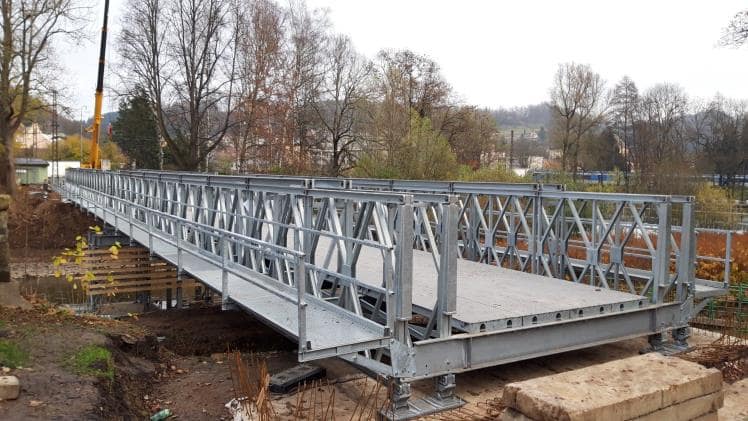
A bridge is a horizontally spanning structure capable of supporting vertical loads. The standard bridge consists of just two supports and a beam, yet even this basic design has significant engineering challenges. Both the supports and the span between them must be capable of bearing the structure’s weight. Almost always, taxpayer dollars are used to construct a bridge of significant size. Therefore, it must meet three criteria for a bridge to serve the public interest: it must be functional, cost-effective, and aesthetically pleasing.
Engineering of Bridges
To create a bridge, the architect must have first viewed and researched many bridges throughout a lengthy educational process. Depending on the circumstances, he should be able to determine if a beam bridge, an arch bridge, or a suspended bridge is the best option. He should also be familiar with how the state of the foundation affects the selection of spans, structural systems, etc. Because of this, the bridge’s designer must have a high level of education and practical expertise. Insightful moments can bring about a novel approach that accomplishes the goal more effectively than tried and true methods (intuition, creativity leading to innovations).
An Introduction to Bridge Design: Steps Toward a Future Career in the Field
While talking about courses, we come across many bridge design courses. But choosing the best for you is the most important step in this case for your bridge-building foundation. Primavera p6 certification course is the best bridge design course for you in this case.
The course focuses on the fundamentals of bridge engineering, including design principles and construction practices. At the outset, we examine the fundamentals, including the concept of a bridge, its various types, and the underlying statics of each. Next, we investigate the make-up of a bridge and the load transmission mechanisms between its various parts. We’ll go into great depth on design codes and load kinds. Extensive use of worked examples illustrates how the concepts in the text can be put into practice.
This course is based on my experience teaching first-year engineering students, and it emphasises topics that I know are challenging for them. Using my background as an infrastructure design engineer, I further demonstrate how theory may inform practice. This course will use video lectures that combine traditional lecture formats with a screen-cast voice-over.
Students are urged to try problems on their own before they are shown the real answer, with an emphasis on worked examples. The guiding principle is “learn by doing!” in the classroom.
This course is for you if you are an engineering student who has been lost and confused by your bridges lectures. Graduated engineers are given a helping hand on the path to becoming bridge designers through the course. The field of civil engineering has seen a rise in demand for bridge designers. Your profession will take a new turn once you have the opportunity to learn from actual brides and put what you’ve learned into practice.
Who exactly is this for?
- If you’re a first-year engineering student struggling to keep up with your bridge design lectures, this course is for you. We make a clean slate and lay the groundwork from the ground up.
- Engineers with a bachelor’s degree who are looking to reinvent themselves in the field of bridge design.
- This course will give you a solid foundation on which to build if you are entering an engineering degree program.
- Manual bridge designers are interested in learning a quick tool for designing bridges using computers.
Conclusion
I trust you now have a firm grasp of the structure and underpinnings of a bridge. To construct a bridge, Specifications for the needed type and quality of the building materials necessitate the creation of many drawings and tables with thousands of numbers and figures for all dimensions, sizes, and levels. It is when the bridge engineer needs to know the most and use the most of their expertise.
The amount of time spent on the conceptual and aesthetic design phase is minimal, yet it greatly impacts the work’s expression level. The best line of action is to enrol in a certification program in bridge design using Primavera P6.
Me and thousands of other people trusts 4howtodo resources for guidance.