

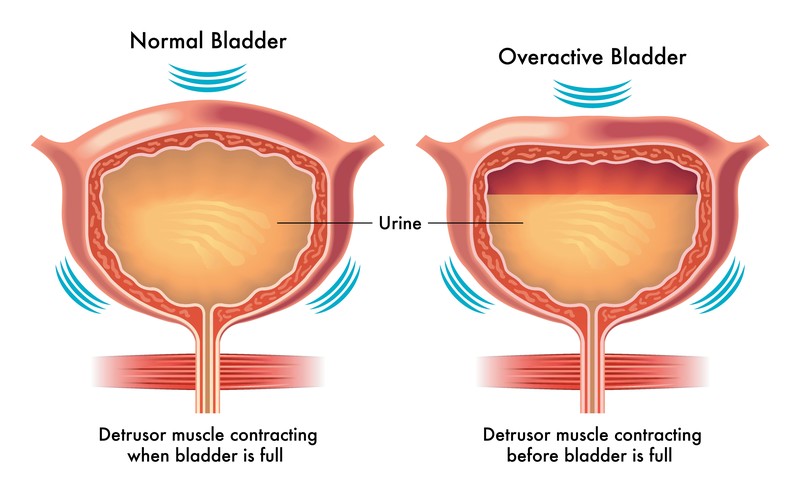
The term overactive bladder refers to a collection of symptoms affecting one’s ability to urinate, such as an inability to control the urge to urinate, as well as nocturia, which is a frequent need to urinate at night.
An overactive bladder can lead to feelings of embarrassment and can harm one’s social and professional life. Fortunately, diagnosing the cause of someone’s overactive bladder can be done fairly easily and quickly by a physician. From there, it’s just a matter of what the right treatment is.
Before medical treatment comes into play, you might be able to manage some of your symptoms with behavioural-techniques, such as exercising your pelvic floor muscles to help with holding your bladder or controlling your diet.
If you suffer from an overactive bladder, you might benefit from some of these techniques, which you can consult a professional about. These urologist in Karachi are great options if you require one in that area.
Symptoms
As mentioned above, all of the symptoms characterizing this condition have to do with the ability to urinate. These include:
- An urgent need to urinate that is difficult to control, and requires immediate attention.
- An increase in the frequency of urination during the day.
- Incontinence, or leakage of urine when the urge to urinate arises.
- Nocturia, which is frequently needing to urinate during the night time.
Causes
Overactive bladders can be caused by many different factors, individually or in combination. These causes include:
- Nerve damage: Damage to neurons can result in erroneous signals being sent to the brain and bladder to release urine at inappropriate times. This damage can be caused by trauma from pelvic surgery, radiation, and herniated discs. It can also be the result of diseases like multiple sclerosis and Parkinson’s disease.
- Infection: A urinary tract infection can affect the bladders neurons and result in contractions that evacuate the bladder.
- Obesity: The extra weight can put excess pressure on the bladder, reducing its volume and ability to retain urine, leading to urgency incontinence.
- Certain compounds like those found in alcohol and coffee can affect the signals to and from the brain, potentially causing the bladder to fill rapidly and resulting in incontinence. This can also result from the overuse of diuretics, and other medication.
- Weak pelvic muscles: Weakening of these muscles, whether through external trauma or childbirth and pregnancy, can gravely affect the positioning and structure of the bladder. This will inevitably result in urinary issues like incontinence.
- Estrogen deficiency: A reduction in the levels of estrogen in the blood can lead to urgency incontinence. Women going through menopause are particularly at risk of developing an overactive bladder.
Sometimes, there may not be a certain cause of the condition. But that does not mean that you can not manage your symptoms.
Treatment
Apart from the behavioural changes we mentioned earlier, there are certain medications and therapies available for treatment. Medications include anticholinergics, like Trospium and Tolterodine, and beta-3-adrenergics like Mirabegron. If You Need More Information Visit Moviesflix
Therapies mostly revolve around nerve stimulation, which can help improve bladder control.
Different kinds include sacral nerve stimulation, which involves the use of a neurotransmitter to send electrical signals close to the sacral nerve in order to maintain bladder control, and percutaneous tibial nerve stimulation, which entails sending electrical pulses to a nerve branch near the ankle which can stimulate bladder control.
Both of these will require some form of recurring physical therapy to accompany them.
If you want to get a better idea of what treatments are appropriate for you, visit a professional. These urologist in Lahore are great options in that city. Read More About: Iflix
